
By Jacob van Winkle
For most of this year, the overnight hours on West 55th Street belonged to trucks. Refrigerated deliveries rolled into the loading dock serving the hotel at 151 West 54th Street at one, two, three in the morning: engines idling, liftgates slamming, compressors droning under bedroom windows. Residents of two West 55th Street buildings lived with it night after night, and one neighbor did more than lose sleep. Since January, that resident kept a meticulous archive: timestamped videos, decibel readings, and a growing stack of 311 complaints.
The record told a frustrating story: dozens of complaints at the dock since January, more than half of them overnight, and almost nothing to show for it. Inspectors arrive on inspectors’ schedules, trucks leave on trucks’ schedules, and case after case closed with no violation found. The residents had done everything right, and the system had quietly filed their nights away under paperwork.
One letter
On the morning of July 31, the West 50s Neighborhood Association sent a formal letter to the hotel’s general manager, its operators, and the elected officials and agencies who cover this block. The letter did not ask anyone to be outraged. It laid out the complaint record, the enforcement gap, and a short list of specific, operational fixes.
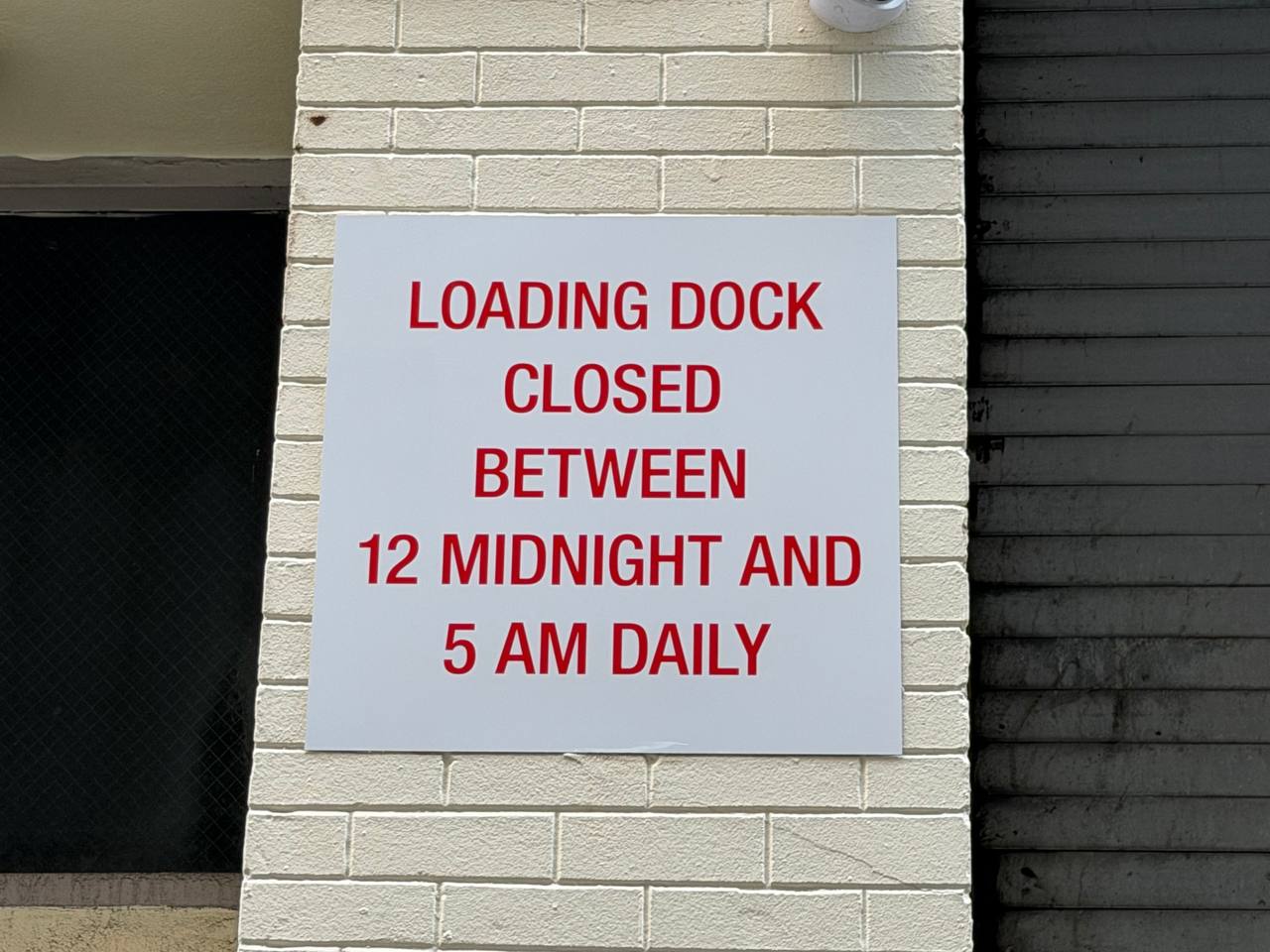
Geoffrey Mills, general manager of The London, a Luxury Collection hotel, called the same morning. By that afternoon he had confirmed the changes in writing: the hotel’s major overnight vendors, Sysco, Chef’s Warehouse, and Baldor, moved to morning hours, and permanent signage ordered for the dock reading no loading dock activity between midnight and 5 a.m., with a single quiet exception for the early bread and pastry van that feeds the breakfast service. Within the week the sign was up, photographed, and confirmed in a formal follow-up. Mills then went a step we did not ask for: he personally contacted the building manager at one of the affected residential buildings to make sure the changes had reached the people they were for.
The letter was sent on a Friday morning. The problem was fixed by that afternoon and confirmed in writing. It is worth saying plainly: this is what it looks like when a business takes its neighbors seriously, and The London has earned the credit.
The results have largely held. There have been two hiccups since, a truck that slipped through overnight in August and an early-morning idler this month, and both times the hotel investigated on its own cameras and responded within hours. That, as much as the quiet, is the point: the block now has a working relationship instead of a complaint file.
Council Member Gale Brewer, who received our letter, has taken the systemic half of the problem forward, raising overnight delivery practices with the Department of Transportation. The fix on one block should not depend on one cooperative manager, and we are glad her office sees it the same way.
The next fight is already underway
The loading dock was never the only noise on these blocks, and the same method is now aimed at a harder target: 7th Avenue.
City data shows 7th Avenue between 53rd and 56th Streets is the most complained-about noise location in the area, roughly one hundred complaints since the start of 2024, most of them vehicle noise, and nearly half filed between midnight and 6 a.m. The enforcement rate is a few percent. And buried inside those complaints is a sound the system cannot even name: the back-up alarms of a taxi stand, and the school buses that queue through the day. 311 has no category for back-up alarms, so for years the problem has been filed under generic idling and vehicle noise, documented but invisible.
A neighbor on West 54th Street changed that. Digging into the regulations, this resident found the actual fix: the alarms are required equipment under the Taxi and Limousine Commission’s own vehicle specifications, which means no amount of complaining about drivers can ever quiet them. Only amending the specification can, replacing the piercing tonal beepers with the modern alarms, the soft static hiss, that other fleets already use. Under the City Charter, any person may petition an agency to amend its rules, and the agency must respond within sixty days. The W50s Neighborhood Association is preparing exactly that petition.
How you can quickly help
The petition will stand on the complaint record, and the complaint record is built by neighbors. If the beeping reaches you, file each time it does:
Go to the 311 Noise from Alarm page and click “Report a chronic or past alarm.” Set the details to Chronic, fill in the recurring schedule, and in the description write “Back-up alarm – taxi stand” for the taxis or “Back-up alarm – school bus” for the buses. Use 826 7 Avenue as the location. If you are filing from the app in the middle of the night, the app path Noise > Car/Truck > Horn works too, with the same description line: “Back-up alarm – taxi stand” or “Back-up alarm – school bus”.
Those exact phrases matter. They are what lets us split the record cleanly, taxis toward the TLC petition, buses toward the state and the schools, and turn a pile of anonymous complaints into a documented pattern with a name.
The loading dock taught us the recipe: a precise record, a specific ask, and the patience to build both. West 55th Street got its nights back in one afternoon because neighbors had spent six months writing everything down. 7th Avenue is next!
Questions, recordings, or a story of your own about the beeping: contact@w50s.org.
Authored by Jacob van Winkle, Treasurer, West 50s Neighborhood Association.